Insight Realm
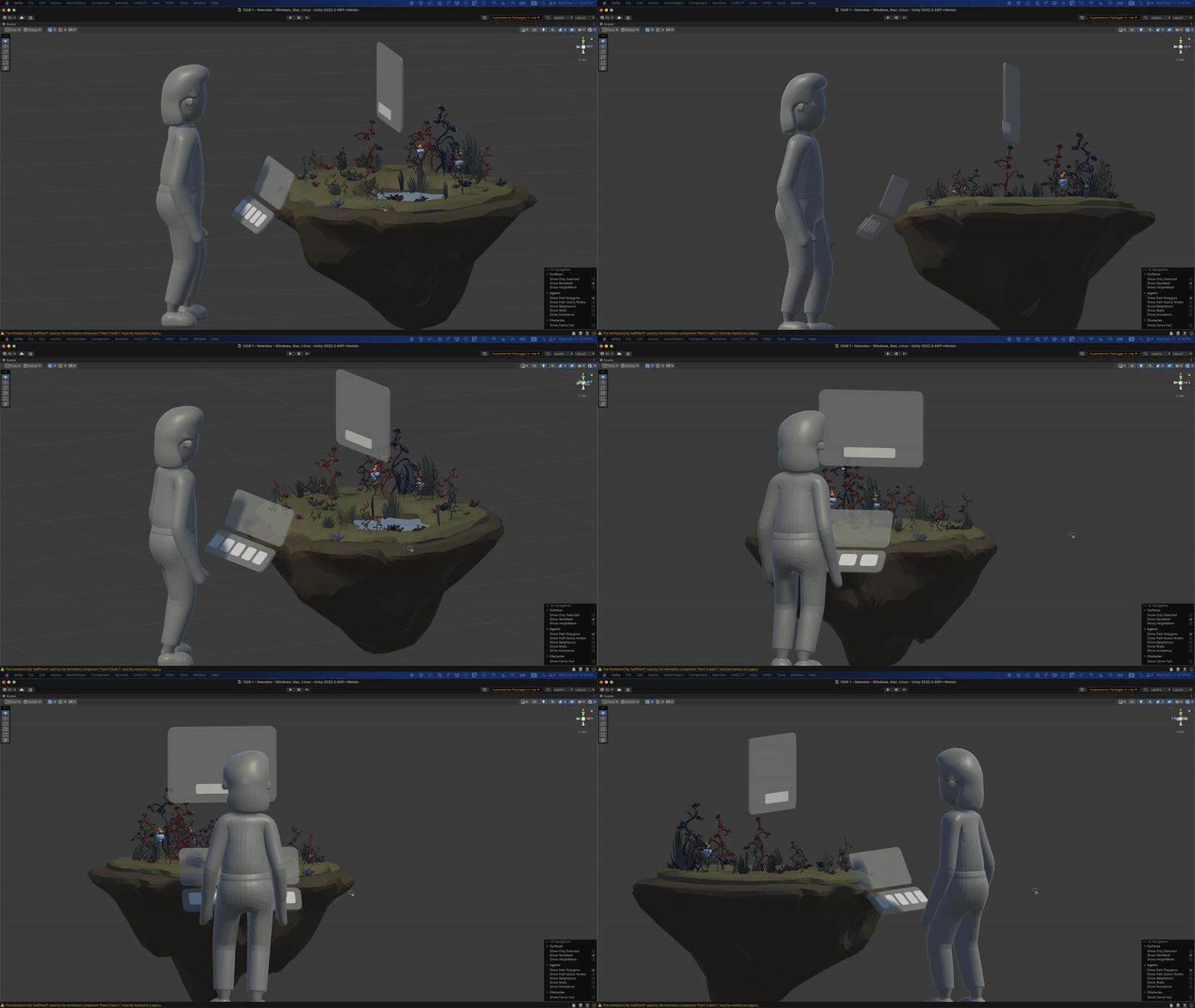
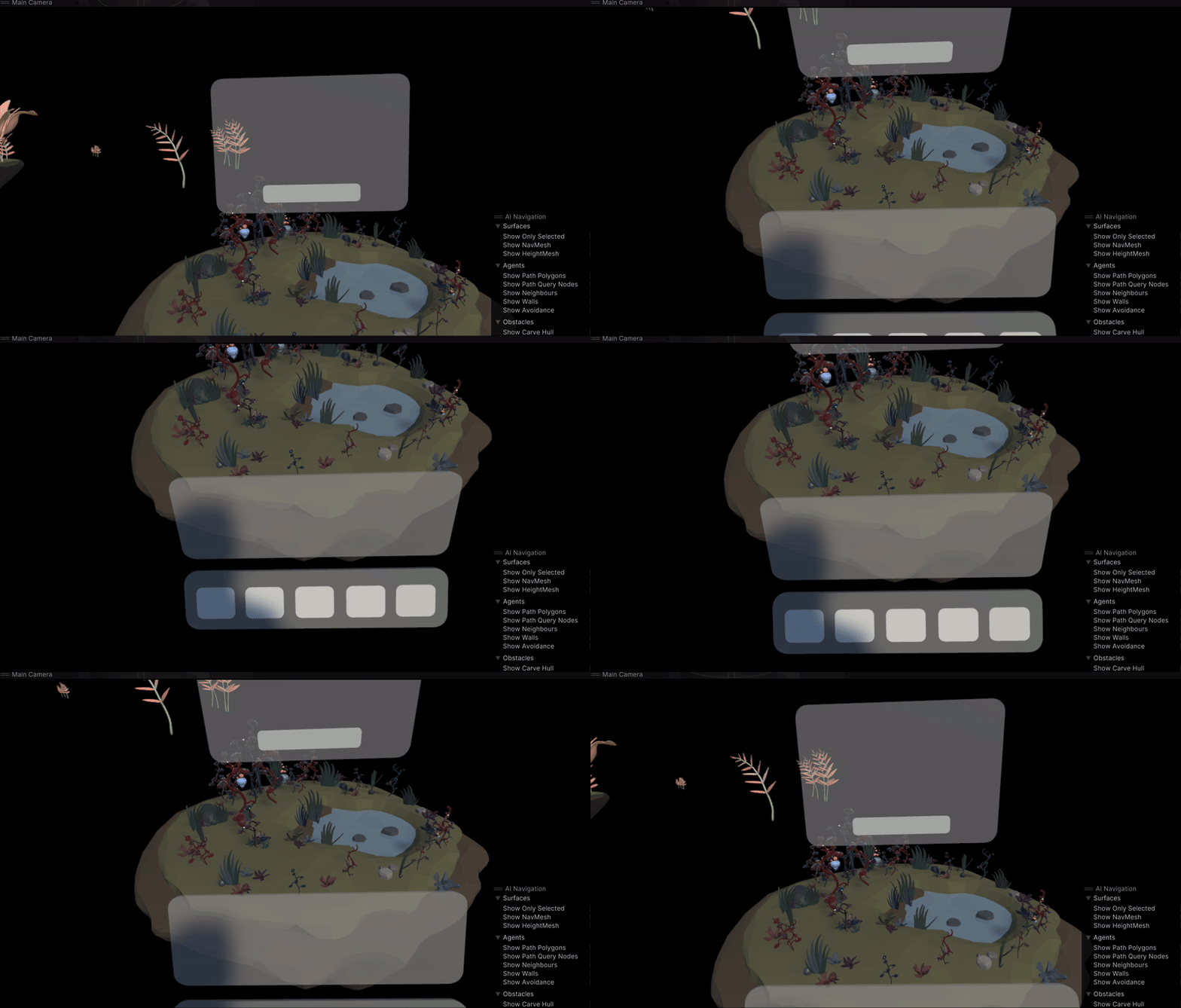
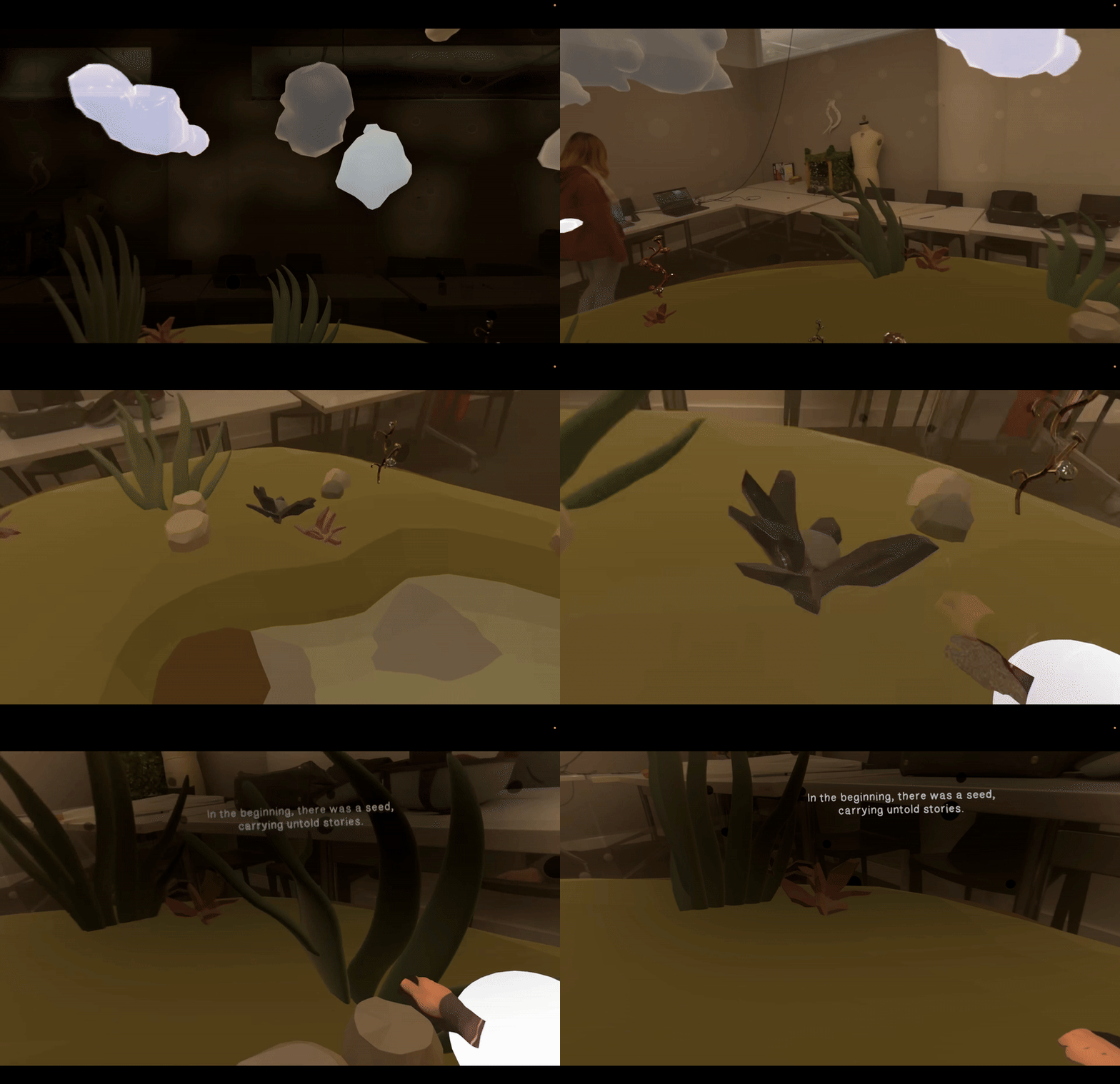
nsight Realm is a spatial computing experience centered on the “Perception Box” neuropsychological term—a controlled immersive environment designed to facilitate understanding of illusive self-awareness, cognitive flexibility, and personal transformation. By externalizing the perceptual self as a metaphorical island containing a symbolic garden, the project utilizes visual immersion, narrative-driven storytelling, and physical interactions with virtual objects to bridge the gap between internal cognitive states and externalized spatial schemas.
This is a prototype and will continue to be developed further.
Featured at Immersive Acts Symposium︎︎︎ @ Royal College of Art
Immersive Innovation Design: Bodies, Sensors, and New Narratives 03.2026
Linkedin Post by Styly︎︎︎
XR Spatial Computing Interaction Design
Styly, Vision Pro
Oct 20–Dec 16 2024
Built with Unity in Styly for Vision Pro
Aimed for submission to Styly NEWVIEW 2024
Tools:
Unity, Styly, Blender, Figma, Vision Pro
TEAM Echo
Binna Lee, Director: Design Direction and development in concept and interaction design, research, 3D design, Unity
Daniel Cano: Co-researcher in Therapy Methods and Cognitive Therapy | MS Psychology, Queens College
Siyuan Fu, MFA Design and Technology: Visual Scripting in Unity
Roy Yang, Product Designer: Unity, Interaction Design
Owen Chan, BFA Design and Technology: 3D Design Assistance

Questions:
Why is it difficult to recognize cognitive biases shaped by external influences? Our perception, guided by these biases, fundamentally dictates how we interpret the world. As this is an integral yet intangible process, how can we transform this invisible mechanism into a tangible experience? How might such an experience help individuals understand the importance of their self-perception and provide metaphorical contexts for exploring how their perceptions are formed?
Why is it difficult to recognize cognitive biases shaped by external influences? Our perception, guided by these biases, fundamentally dictates how we interpret the world. As this is an integral yet intangible process, how can we transform this invisible mechanism into a tangible experience? How might such an experience help individuals understand the importance of their self-perception and provide metaphorical contexts for exploring how their perceptions are formed?
Purpose of the Project:
To create an experiential journey that reveals the neuropsychological underpinnings of perception and cognitive biases, enabling individuals to engage with the invisible processes shaping their worldview. By making these phenomena tangible and interactive, the project aims to foster deeper self-awareness and challenge ingrained biases, ultimately encouraging shifts in how people perceive themselves and their surroundings.
To create an experiential journey that reveals the neuropsychological underpinnings of perception and cognitive biases, enabling individuals to engage with the invisible processes shaping their worldview. By making these phenomena tangible and interactive, the project aims to foster deeper self-awareness and challenge ingrained biases, ultimately encouraging shifts in how people perceive themselves and their surroundings.
Programming
The experience employs dynamic storytelling and guided prompts to ignite curiosity about the evolving environment, enabling users to actively influence and observe transformations in their surroundings, their sense of self, and their perceptions. These interactions offer a third-person perspective, uncovering the hidden cognitive and developmental processes that shape human understanding over time.
The experience employs dynamic storytelling and guided prompts to ignite curiosity about the evolving environment, enabling users to actively influence and observe transformations in their surroundings, their sense of self, and their perceptions. These interactions offer a third-person perspective, uncovering the hidden cognitive and developmental processes that shape human understanding over time.
Designed with neuropsychological principles at its core, the gamified mechanics mirror the dynamic interplay of thought, emotion, and behavior. By revealing how perception evolves—both positively and negatively—users gain empowering insights into how they can reshape their perspectives and navigate the complexities of reality with greater self-awareness.
Experience Flow:
Preprogramming – Users discover the foundational layers of perception shaped by early influences.
Cognitive Biases Reinforcing Perception – Explore how biases, such as negativity and confirmation bias, strengthen habitual thought patterns.
Neuroplasticity and Reframming – Engage with scenarios that showcase the brain’s adaptability and potential to reshape perceptions.
The Potential for Change – Conclude with insights on how users can actively reshape their “perception box,” fostering a more flexible and adaptive mindset.